
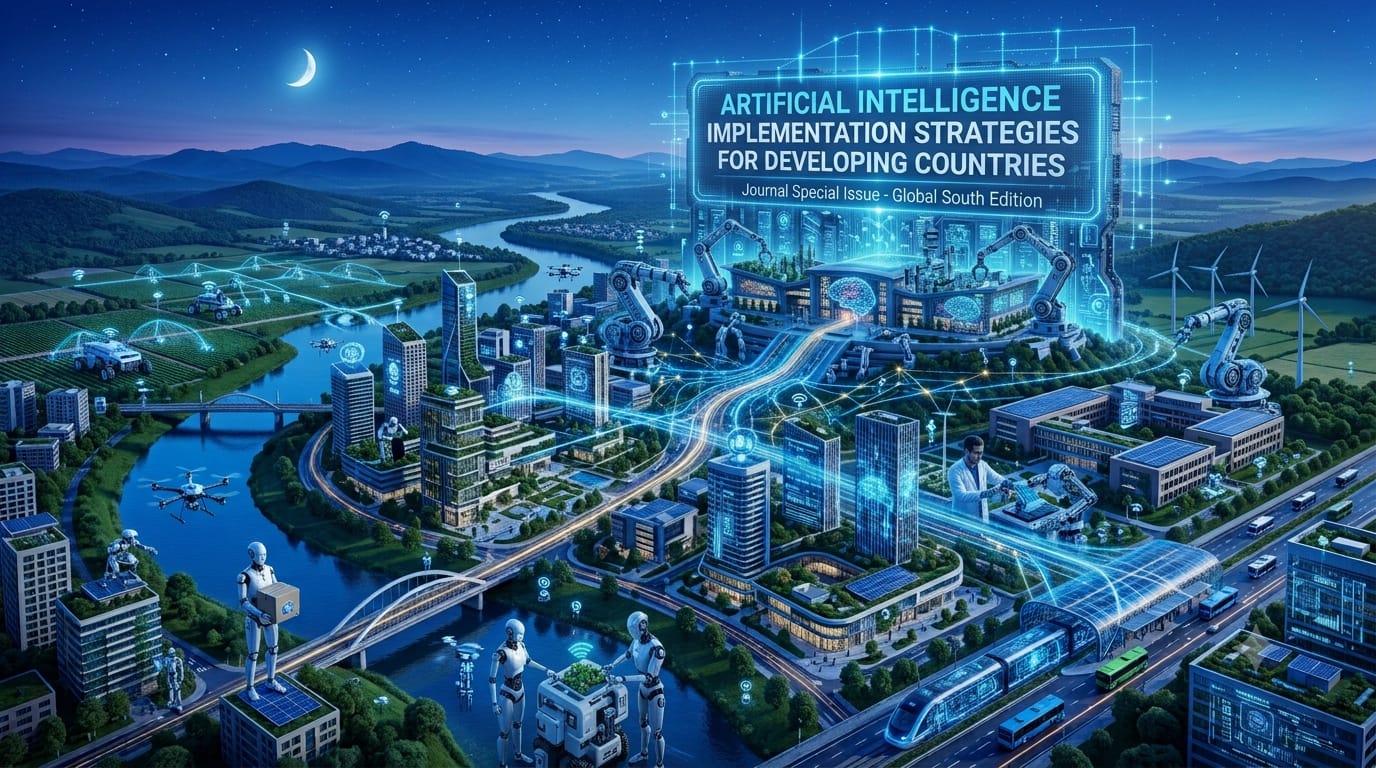
Artificial Intelligence Implementation Strategies for Developing Countries
Artificial Intelligence (AI) is rapidly reshaping industries, economies, and societies across the globe.
 Guest Editor:
Dr. Aliyuda Ali
Guest Editor:
Dr. Aliyuda Ali
Guest Editors
Curated by leading experts
This Special Issue is developed and overseen by the Guest Editor below, working with the DAPresses editorial office.
Dr. Aliyuda Ali
Computer Science and Software Engineering, Sheffield Hallam University
Dr. Aliyuda Ali is a Senior Lecturer in Computer Science and Software Engineering at Sheffield Hallam University (SHU), UK. With over a decade of experience across higher education institutions in the UK and internationally, his work focuses on practical, trustworthy artificial intelligence and data-driven technologies designed to address real-world societal challenges. He has an extensive publication record in peer-reviewed journals and international conference proceedings. He is committed to supporting rigorous, fair, and timely peer review while promoting excellence, ethics, and integrity in scholarly publishing.
Dear Colleagues
DAPresses journals are Open Access, as it aligns with UNESCO Recommendations on Open Science and connects a minimum of two United Nations Sustainable Development Goals (SDGs 2030). Therefore, this Special Issue collection is intended to connect AI to other areas of human development using systems-thinking approaches that transcend disciplinary boundaries, integrate diverse forms of knowledge, and advance research strategies across the globe. All contributions related to STEM will be published in Dialogic STEM Journal. All submissions will be peer-reviewed if they pass the desk review by the respective Editorial Team of the Journal.
Overview
Scope and Objectives
• Strengthen collaborations among governments, academia, civil society, and the private sector on AI policy and deployment.
• Integrate indigenous and local knowledge systems into AI research, design, and governance frameworks.
• Advance AI policies, programmes, and governance in developing countries.
• Promote equitable, inclusive, and resilient AI development pathways and partnerships
Topics of Interest
Examples of areas we invite submissions, but not limited to, include:
AI in agriculture and food security
AI in healthcare and public health systems
AI in education and digital literacy
AI and financial inclusion (fintech, mobile money, microfinance)
AI governance, regulation, and policy frameworks
Ethical AI and algorithmic fairness in developing contexts
AI and climate change adaptation
AI in public administration and e-governance
AI for disaster risk reduction and humanitarian response
Natural language processing for low-resource and indigenous languages
AI and infrastructure development
AI in small and medium enterprises (SMEs) and entrepreneurship
Data sovereignty, privacy, and security in AI systems
AI capacity building and human resource development
Machine learning and data science in resource-constrained environments
AI and gender equity, inclusion, and social justice
AI and youth development
AI and creative industries
Philosophy, ethics, and decolonisation of AI
Community-centred and participatory AI design
And any other submission from any discipline connected to AI implementation in developing countries.
Types of Submissions
• Review Papers
• Short Communications
• Brief Reports
• Reflective Practice
• Policy Briefs
Submission Guidelines
• Single-blind peer review process
• Follow journal templates depending on where your article is most suited:
- Dialogic STEM Journal (STEM fields)
- Dialogic Society Journal (Social Sciences & Humanities)
• Optional abstract pre-assessment by editorial office
• DAPresses Language Editing Services (DAPLES) available
Publication Information
• Published under Special Issue collections
• Hosted in Dialogic STEM Journal and Dialogic Society Journal
• Open access and peer reviewed
Article Processing Charge
• £300 / $300 / €300
Guest Editor opportunity
Serve as a Guest Editor with DAPresses
DAPresses Special Issues are led by experts who want to shape the conversation in their field. As a Guest Editor you define the scope, invite leading contributors, oversee peer review with our editorial office, and carry a permanent, citable record of the collection you built.
Shape the field
Define the scope, themes and standards of a permanent scholarly collection.
Build your standing
A named, indexed editorial role you can cite in promotion and grant applications.
Full editorial support
Our editorial office runs the peer review workflow, production and promotion.